
The average cost of solar panels is usually the first number people look up, and it is a fair place to start. It tells you whether solar is in the range of things you might do. What it cannot tell you is what solar would cost on your roof, with your sun exposure, your electrical service and the way your household actually uses power. Solar is custom, and an average is built by smoothing out exactly the things that make your project yours.
This guide explains what an average is made of, what to check before you trust one, and what really moves the price on an Illinois home or business in 2026. If you are doing some reading over the holidays, one thing is worth knowing up front: much of what is still published about solar cost was written before the federal residential credit ended, so a figure quoted “after the tax credit” may describe a credit an Illinois homeowner installing today cannot claim. Windfree Solar has been designing and installing solar in Illinois and the Midwest since 2009, with 1,200+ systems installed.
Summary
- An average cost blends many systems of different sizes, on different roofs, with different equipment and in different markets. It is a starting point, not a price for your home.
- Check the date and the fine print. The federal residential clean energy credit does not apply to systems placed in service in 2026, so a national average quoted “after the credit” overstates what comes off a homeowner’s price today.
- For Illinois homeowners, Illinois Shines and net metering are what shape net cost now.
- System size, sun exposure, roof type and condition, electrical service, equipment and the utility process are what move the price on a specific building.
- The way to get a number that is actually yours is a design built on your roof and twelve months of your own usage.
What an Average Cost Is Actually Made Of
An average cost of solar panels pools a large number of installed systems into one figure. Those systems were different sizes, went on different roofs, used different equipment and were built in different states with different labor costs, permitting and utility rules. The average is real, but it describes all of those projects at once, which means it describes none of them exactly.
Averages are often expressed as a price per watt so that systems of different sizes can be compared. That is useful, but a per watt figure only becomes a price once it is multiplied by a system size, and the right size for your home depends on how much electricity you use. Two neighbors on the same block can need very different systems.
A whole-system average also folds in costs that may not apply to you, and leaves out costs that might. A battery, a roof that needs attention first, or an electrical panel that needs an upgrade can each change the picture for one home and not the next.
Before You Trust an Average, Check the Date and the Fine Print
Cost articles stay online for years, and incentive rules change faster than old articles get updated. When you read an average, look for two things: when it was published, and whether the number is before or after incentives.
That second question matters more than usual right now. The federal residential clean energy credit under Section 25D applied to systems placed in service through December 31, 2025, and the IRS states that the credit is not available for any property placed in service after December 31, 2025. A homeowner whose system is installed in 2026 receives no federal residential credit. The test is when the installation is completed, not when it was paid for, so a deposit made in 2025 on a system installed in 2026 does not preserve the credit.
So if an average cost is quoted as a net figure after a federal credit, it describes a credit that does not apply to a home system placed in service this year. For Illinois homeowners, Illinois Shines, the Illinois Power Agency‘s Adjustable Block Program, and net metering are what shape net cost now. Illinois Shines is a state incentive that supports solar PV development through the purchase of renewable energy credits (RECs), and Windfree Solar is an Approved Vendor under the Illinois Shines program. Our guide to updated solar incentives for Illinois in 2026 covers the current picture, and our post on how ComEd net metering credits work explains how exported power is credited on your bill.
How any of this applies to you depends on your situation. Check with your tax advisor. We don’t give tax advice.
What Actually Moves the Price on a Specific Home
Every project is different, but the same handful of things decide where a home lands compared with any average.
- How much electricity you use. System size follows usage. Twelve months of utility bills tell us far more than any average can.
- Sun exposure. A parkway tree, a taller building next door or a chimney can shade a roof at different hours and in different seasons. A better site produces a better return, and sun exposure is confirmed on site.
- The roof itself. Its shape, its type and its condition all affect the design and the work. If the roof under the panels is near the end of its life, that belongs in the same conversation as the solar.
- Your electrical service. Panel capacity and where the system ties in are part of the design, and they are checked in person.
- Equipment. Panels, inverters and racking vary, and so does availability. What gets specified has to be something that can actually be sourced and warrantied.
- Permitting and the utility process. Local permits, inspection and interconnection with ComEd or Ameren are part of every project, and they take real work.
- A battery, if you add one. Storage changes both the scope and the price. Our post on adding battery storage to a solar system covers what to know first.
If you are not sure whether your roof is a good candidate at all, our guide to telling if your roof is a good fit is the place to start.
Compare What a Quote Includes, Not Just the Total
When you do get quotes, the total at the bottom is only meaningful once you know what it covers. A full-service project includes sales, engineering, permitting, procurement of materials, interconnection, inspection and permission to operate (PTO), which is the utility’s approval to switch the system on. Our walkthrough of what a solar company does, step by step explains each of those stages.
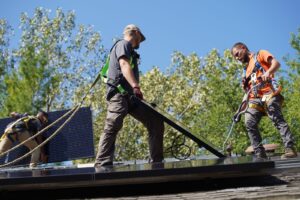
At Windfree, we hire small contractors to install. They are crews that typically cannot or do not want to take on the full turnkey work and everything it requires, so they can focus on the on-site work while we make sure the project is complete every step of the way.
Ask about the warranty too, because it is part of what you are paying for. Windfree Solar is a Solar Insure certified provider, which not every installer can be, and on qualifying systems that means a 30-year warranty covering equipment and labor.
For a Business or New Building, an Average Says Even Less
A commercial project has more variables than a home, so a commercial average is even further from a real price. Labor requirements are a big one: solar incentives in Illinois come with very specific labor rules, and whether a project calls for union or prevailing wage labor shapes the cost from the start. Roof attachments and roofing warranties, crane and site access, conduit routing and utility interconnection all vary from one building to the next.
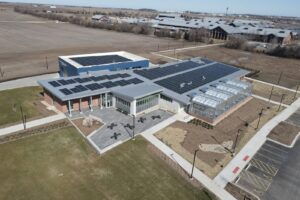
Timing matters as well. The 30% commercial federal credit is not open ended. For a commercial project that began construction after July 4, 2026, the system must be placed in service by December 31, 2027 to qualify. Our Heartland Community College case study shows what one commercial project involved, from a mid-project labor change to a roof with zero penetrations.
How to Get a Number That Is Actually Yours
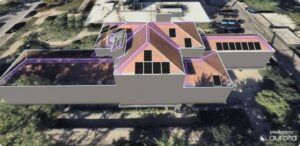
- Take a first look. Our solar calculator draws a solar design on your own roof from your address, along with an estimate to start the conversation.
- Gather twelve months of utility bills. Your usage is what the system is sized around.
- Have the site reviewed. Sun exposure, roof condition and your electrical service are confirmed in person.
- Review a proposal built on your building. A real design, with the scope spelled out, is what you compare, not an average.
- Understand the incentives that apply to you. For homeowners that means Illinois Shines and net metering. Check with your tax advisor on anything tax related.
For a broader look at whether solar makes sense for your home this year, read our honest answer on whether solar panels are worth it in Illinois.
Frequently Asked Questions
Why doesn’t the average cost of solar panels match my quote?
An average blends many systems of different sizes, on different roofs, in different markets. Your quote is built on your usage, your sun exposure, your roof and your electrical service. Solar is custom, so the two will rarely line up exactly.
Does the federal tax credit lower the cost of solar panels on my home in 2026?
No. The federal residential clean energy credit under Section 25D does not apply to systems placed in service in 2026. For Illinois homeowners, Illinois Shines and net metering are what shape net cost now. Check with your tax advisor. We don’t give tax advice.
I paid a deposit in 2025, but my system was installed in 2026. Does the federal credit still apply?
The IRS treats the expense as made when the installation is completed, not when it was paid for, so a system installed in 2026 does not qualify for the residential credit even if a deposit was paid in 2025. Your tax advisor can confirm how this applies to you.
Will solar take my electric bill to zero?
No. There are always charges to stay connected to the grid, so the cost will never be zero, though it can be significantly reduced.
Does solar only make sense on a house?
Solar can go on almost any building, including garages. For a business or a new commercial building, the planning is different, so contact us to talk through the project.
Get a Number for Your Own Roof
An average can tell you whether solar is worth looking into. A design built on your building tells you what it would actually take. To start, try the solar calculator from the top menu on windfree.us, or contact Windfree Solar, email sales@windfree.us or call 312-588-6953. You can also browse our projects page, or stop by the Windfree Solar Cafe at 517 Dempster Street in Evanston and ask your questions in person.