If you have searched for Illinois solar incentives lately, you have probably found posts from 2024 and 2025 that describe a federal tax credit most homeowners can no longer claim. The rules changed in 2025 under the One Big Beautiful Bill Act (OBBBA), and they changed differently for homeowners than for businesses, nonprofits and public buildings.
This guide sorts out what is still available in 2026, what expired, and what now runs on a deadline. Windfree Solar has been designing and building solar in Illinois since 2009, and these are the questions that shape what an incentive is actually worth on a given project.
Summary
- The federal residential clean energy credit (Section 25D) does not apply to home systems placed in service after December 31, 2025. A homeowner who buys a system in 2026 gets no federal credit.
- A lease or power purchase agreement (PPA) still carries a federal credit, but the leasing company claims it, and it is on a deadline of its own.
- The 30% federal credit for commercial solar is still available, with a deadline that depends on when construction began relative to July 4, 2026.
- Illinois Shines, the state’s solar renewable energy credit (SREC) program, is a state program and runs separately from the federal changes. Its incentive levels are set by program year, and the 2026-27 program year is now underway.
- Whether incentives combine on a specific commercial project is a question for your tax advisor. We don’t give tax advice.
- What Changed for Illinois Homeowners
- Leases and PPAs: The Remaining Federal Path
- Illinois Shines and SRECs
- Net Metering and the Distributed Generation Rebate
- Commercial Solar: The 30% Credit Has a Deadline
- Nonprofits, Churches and Public Buildings
- Combining Commercial Incentives
- How We Work Through Incentives on a Project
- Frequently Asked Questions
What Changed for Illinois Homeowners
The federal residential clean energy credit, Section 25D of the tax code, covered systems installed from 2022 through December 31, 2025. The IRS Residential Clean Energy Credit page states that the credit is not available for any property placed in service after December 31, 2025.
The detail that catches people is the test itself. The credit follows the date the installation was completed, not the date of payment. A homeowner who put down a deposit in 2025 but whose system was installed in 2026 does not qualify. If anyone told you a 2025 deposit locked in the credit for a 2026 install, check that against the IRS guidance before relying on it.
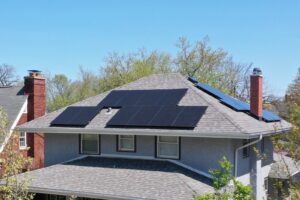
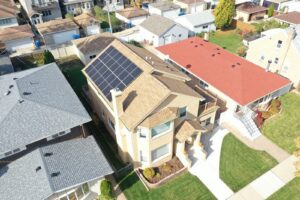
For a homeowner buying a system outright in 2026, plan around the quoted cost with no federal credit reducing it. The state incentives below still apply. Our post on whether solar panels are worth it in Illinois walks through how a homeowner should think about that decision now.
Leases and PPAs: The Remaining Federal Path
In a lease or power purchase agreement, a company owns the system on your roof and sells you the power or charges you a payment. That company, not the homeowner, claims a federal credit under Section 48E, the clean electricity investment credit, and the value reaches you, if at all, through the payment structure.
Two things to keep in view. First, the owner holds the asset and claims the credit. You are neither the owner nor the taxpayer, so read any lease offer with that in mind. Second, this path is on a clock. For a system beginning construction now, it has to be placed in service by December 31, 2027 for the owner to claim the credit. A lease is not an open-ended substitute for the expired purchase credit.
Windfree Solar installs systems homeowners own outright. Solar is custom, and which structure fits depends on your roof, your sun exposure, your usage and how long you plan to stay in the home.
Illinois Shines and SRECs
The Illinois Shines program is a state incentive that supports solar PV development through the purchase of renewable energy credits (RECs). It is the Adjustable Block Program run by the Illinois Power Agency. If your application to the program is successful, your system will be part of Illinois Shines, and the renewable attributes of the electricity it produces will be sold to keep the cost of your panels affordable.
Because Illinois Shines is set by state law and the Illinois Power Agency rather than the federal tax code, the OBBBA changes did not end it. The program does adjust over time, and incentive levels are set by program year; the 2026-27 program year is now underway. Current program details are published at illinoisshines.com, and the figures that apply to your system appear in your proposal and the program’s Standard Disclosure Form. Windfree Solar is an Approved Vendor under the Illinois Shines program.
Net Metering and the Distributed Generation Rebate
Net metering credits the electricity your system sends to the grid. For new ComEd customers, the rules that took effect January 1, 2025 credit the supply side of your bill, while delivery charges still apply to the power you draw from the grid. Your bill can be significantly reduced, but it will never be zero. Our guide to ComEd net metering in 2026 explains how the credits work.
Illinois law also provides a one-time distributed generation rebate, set in Section 16-107.6 of the Public Utilities Act. How it applies to your system depends on your utility’s tariff. If you are in Ameren territory, our comparison of ComEd solar and Ameren solar covers how the two utilities differ.
Commercial Solar: The 30% Credit Has a Deadline
For businesses, the 30% federal investment tax credit (ITC) is still available, but OBBBA put a deadline on it, and July 4, 2026 has now passed. Eligibility depends on when construction began.
- Construction began on or before July 4, 2026: the project can generally rely on the continuity safe harbor if it is placed in service within four calendar years after the year construction began.
- Construction began after July 4, 2026: the project must be placed in service by December 31, 2027 to claim the credit.
What counts as beginning construction is defined in IRS Notice 2025-42: physical work of a significant nature, or, for solar facilities of 1.5 MW (AC) or smaller, a five percent safe harbor based on project cost. Projects beginning construction in 2026 also face new foreign entity of concern (FEOC) sourcing rules, which makes equipment procurement part of the credit conversation from the start.
On top of the base credit, the IRS describes a 10 percentage point bonus for projects located in a qualifying energy community, and the credit rate is tied to prevailing wage and registered apprenticeship requirements. Our post on what an Illinois commercial project looks like walks through the steps from bid to permission to operate (PTO), the utility’s final sign-off to turn the system on.
Nonprofits, Churches and Public Buildings
Organizations that do not owe federal income tax can still use the federal credit through elective pay, also called direct pay. Under elective pay, eligible tax-exempt and government entities receive the value of the credit as a payment instead of a reduction in taxes they do not owe. The same construction-start deadlines apply.
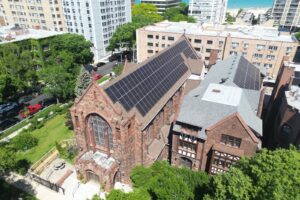
For public and municipal work, Windfree Solar operates as an EPC (engineering, procurement and construction) contractor, which is what qualifies a solar company for that class of project. Savings on a community building can be redirected into the services that organization provides. Our guide to solar for churches and nonprofits in Chicago goes deeper.
Combining Commercial Incentives
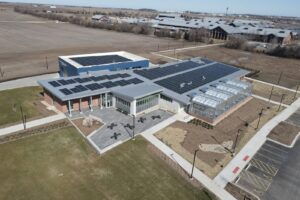
A commercial project can draw on several layers: the federal credit and any bonus it qualifies for, Illinois Shines RECs, and utility programs through ComEd or Ameren. Some owners choose to keep their RECs instead of selling them, for example to support a net zero claim. Heartland Community College did exactly that on its net zero agricultural building.
How those layers combine on a specific project depends on its structure and the owner’s tax position. Illinois Shines rules also require financial figures to be consistent with the program’s Standard Disclosure Form. So we will walk you through which incentives exist and how each one works, and we will ask you to confirm how they combine with your own tax advisor before you build a budget around a total. We don’t give tax advice.
How We Work Through Incentives on a Project
- Site and usage review. We look at your roof or site, sun exposure, electrical service and usage.
- Ownership structure. Purchase, loan, or for qualifying organizations, elective pay.
- Timing. For commercial systems, we map the construction start and placed-in-service dates against the federal deadlines.
- State programs. We walk through the Illinois Shines side of the project, where Windfree Solar is an Approved Vendor, and handle the interconnection and net metering back and forth with your utility.
- Your tax advisor. You confirm the tax treatment with your own advisor before signing.
- Build through permission to operate. We manage sales, engineering, permitting, procurement of materials, interconnection, inspection and PTO. We hire small contractors for the on-site installation so they can focus on the physical work while we make sure the project is complete every step of the way.
Windfree Solar is also a Solar Insure certified provider, which not every installer can be. On qualifying systems that means a 30-year warranty covering equipment and labor. You can see our work on the projects page.
Frequently Asked Questions
I paid a deposit in 2025, but my system was installed in 2026. Can I claim the federal credit?
No. The residential credit follows the date the installation was completed, not the date you paid, and it does not apply to systems placed in service after December 31, 2025. Check with your tax advisor about your own return. We don’t give tax advice.
Is a solar lease a way around the expired credit?
A lease or PPA still carries a federal credit, but the leasing company owns the system and claims it, and that path has its own deadline. For a system beginning construction now, it must be placed in service by December 31, 2027.
Does Illinois Shines still apply to a home system in 2026?
Yes. Illinois Shines is a state program and was not ended by the federal changes. Its incentive levels are set by program year, and the figures for your system appear in your proposal and Standard Disclosure Form.
Is it too late for my business to get the 30% federal credit?
Not necessarily. A project that began construction after July 4, 2026 can still qualify if it is placed in service by December 31, 2027. That makes timing the first thing to settle, which is why we prefer to be involved from day one.
Our church does not pay federal income tax. Can we still benefit?
Eligible tax-exempt and government entities can use elective pay to receive the value of the credit as a payment. The same construction-start deadlines apply.
Will solar make my electric bill zero?
No. Delivery charges and connection fees still apply to the power you draw from the grid. Your bill can be significantly reduced, but it will not be zero.
Talk Through Your Property
Illinois solar incentives in 2026 are more specific than they used to be, and solar is custom. If you want to know which ones apply to your home, business or building, contact Windfree Solar or call 312-588-6953. You can also stop by the Solar Cafe at 517 Dempster Street, Evanston, IL 60201, and ask in person.