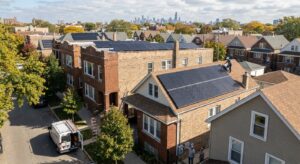
Most articles about solar in Chicago start with what you might save. This one starts somewhere more useful, because the honest first question is not what a system pays back. It is whether your particular roof, in your particular part of the city, is a good candidate at all. Plenty are. Some are not, and the ones that are not deserve a straight answer before anybody climbs a ladder.
Summary
- Roof orientation, pitch, shading and age decide more about a Chicago solar project than equipment brand does.
- South facing is ideal, but east and west facing roofs work perfectly well here and are installed constantly.
- System size follows your actual electricity usage, not your square footage.
- Every grid connected system in ComEd territory goes through an interconnection review, and that timeline is part of the project, not an afterthought.
- Chicago requires a permit for rooftop solar, and the review process varies by property type.
- Good installers will tell you when your roof is wrong for solar. That is the single most useful thing you can learn from a site visit.
Is Your Roof Actually a Candidate
This is where the real filtering happens, and it happens before anyone talks about panels. Four things matter, roughly in this order.
Orientation
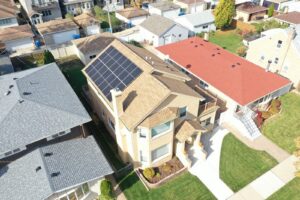
South facing roof planes capture the most sun over a year in this latitude, which makes them the textbook answer. They are not the only answer. East and west facing planes produce meaningfully well in Chicago and get used all the time, often split across both so production spreads across the morning and the afternoon rather than peaking at noon. A north facing plane on its own is the one that genuinely struggles here, and a company worth hiring will say so rather than sell you panels that underperform for twenty years.
Shading
Shade is the quiet killer, and it is the reason two identical roofs on the same block can get two different answers. A mature parkway tree, a taller building to the south, a chimney, a dormer, or a stair bulkhead can all take a bite out of production at exactly the hours that matter most. Shading is measured on site rather than guessed at from an aerial image, because the picture of your roof in August says nothing about where the shadow lands in December.
Roof Age and Condition
Panels last decades. If the roof under them has five or seven years left, that is a conversation to have before installation rather than after, because taking an array off and putting it back on is real work that nobody budgeted for. Chicago has a great deal of housing stock where the roof and the solar decision genuinely belong in the same conversation, and a good installer will raise it unprompted.
Structure and Usable Space
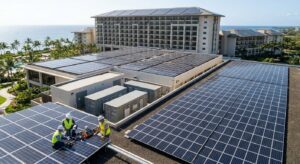
Flat roofs, common on two flats and many commercial buildings here, are workable and are installed on constantly, usually with ballasted or tilted racking rather than a pitched mount. What matters is how much genuinely unobstructed plane you have once vents, hatches, HVAC equipment and required setbacks are accounted for. The usable area is almost always smaller than the roof looks from the street.
How a System Gets Sized
Sizing follows your electricity usage, not the size of your house. A good installer will ask for twelve months of utility bills before proposing anything, because a year of real consumption tells them what your household actually draws and how that shifts between a Chicago January and a Chicago July. Two homes of identical square footage can need noticeably different systems depending on whether there is electric heat, an EV in the garage, central air, or a home office running all day.
If someone quotes you a system size before seeing a single bill, they are sizing off an assumption. Ask what the assumption was.
ComEd, Interconnection, and Net Metering
Any system that connects to the grid goes through an interconnection review with your utility. In most of the Chicago area that means ComEd, and in parts of the state it means Ameren. This step is normal and every legitimate installer handles the paperwork, but it is a real part of the schedule and it deserves to be described honestly up front rather than discovered later.
Net metering is the mechanism that credits you for the power your system exports to the grid when it produces more than the building is using at that moment. It is what keeps an overnight or heavily overcast stretch from erasing the value of a sunny afternoon. ComEd publishes its current net metering terms directly, and the rules have been adjusted more than once in recent years, so the version that applies to you is the version in force when your system is approved.
Permits and Inspection in Chicago
Rooftop solar in Chicago requires a building permit, and the path through the Department of Buildings depends on the property type and the scope of work. Timelines vary. A straightforward single family roof and a multi unit building with a shared electrical service are not the same review.
The useful question to ask a solar company is not whether they handle permitting, because everyone says yes. It is who physically pulls the permit, whether that is included, and what happens to your schedule if the review comes back with comments.
Equipment, and Why It Matters Less Than You Would Think
Panel brands get a great deal of attention in solar marketing and they matter less than the quality of the design and the installation. Modern panels from established manufacturers are broadly reliable. Where real differences show up is in the inverter strategy, how the array is laid out around obstructions, how penetrations are flashed, and whether the installer is still in business in fifteen years when something needs service.
What is worth asking about specifically is the warranty structure, because there are usually several stacked on top of each other. There is a panel manufacturer warranty, an inverter warranty, and separately a workmanship warranty from whoever installed it. Those are three different promises from three different parties, and the one people discover too late is the third.
What to Ask Any Solar Company Before You Sign
- Did you look at twelve months of my bills before sizing this? If not, ask what the sizing was based on.
- Who does the installation? In house crews and subcontracted crews are both common. You are entitled to know which one is on your roof.
- What is covered under workmanship, and for how long? Separate that answer from the panel and inverter warranties.
- What happens if the roof leaks in year six? Ask who you call and what it costs.
- What does the interconnection timeline look like right now? Not in general, right now.
- Would you tell me if my roof was a bad candidate? The answer to that one tells you most of what you need to know.
How Windfree Approaches It
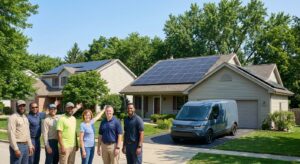
We have been installing solar in Illinois since 2009, across more than 1,200 residential systems, plus commercial work in both ComEd and Ameren territory. That length of time in one market is mostly useful for one reason, which is that we have seen what these roofs and this weather do to a system over the long run rather than over a sales cycle.
We are a certified Minority Owned Business and an Equity Eligible Contractor, and we are a Solar Insure certified provider, which backs qualifying systems with a thirty year warranty covering both equipment and labor, underwritten through Zurich Insurance Group. Not every installer is eligible for that certification, and it becomes relevant precisely at the point when a system is old enough to need attention.
If you would rather ask questions in person before anyone comes to your house, the Windfree Solar Cafe at 517 Dempster Street in Evanston is open to walk in. No appointment, no presentation, no one following you to your car.
Frequently Asked Questions
Do solar panels work in Chicago winters?
Yes. Panels produce from light rather than heat, and they are actually more efficient in cold temperatures. Output does drop over winter because the days are shorter and snow can sit on an array for a stretch, but systems here are designed around a full year of production rather than a single season.
Which direction does my roof need to face?
South is ideal in this latitude, but east and west facing roof planes are installed on regularly in Chicago and perform well. A roof with only a north facing plane available is the one that tends not to be a good candidate, and you should expect an installer to tell you that directly.
How long does the whole process take?
The physical installation on a typical home is usually a small number of days. The overall timeline is longer than that, because it includes design, permitting through the city, utility interconnection review, and final inspection. Ask any company for their current timeline rather than a general one, since permitting and interconnection queues move.
Will solar panels damage my roof?
Properly flashed penetrations should not leak, and the section of roof underneath an array is actually sheltered from sun and weather. The risk is not the concept, it is the workmanship, which is why the workmanship warranty and the installer’s track record matter more than which panel is on the box.
Can I add battery storage later?
Often yes, though it is considerably simpler when the system is designed with storage in mind from the start, because it affects the inverter choice and the electrical layout. If storage is something you are even half considering, say so during the design conversation rather than after.
What if I sell the house?
An owned system generally transfers with the property as an improvement. A system on a lease or a power purchase agreement has to be transferred or bought out as part of the sale, which is an extra step in the transaction and worth understanding before you sign anything rather than at closing.
Solar in Chicago is a building decision before it is an energy decision, and the roof answers most of the question. If you want to know whether yours is a genuine candidate, get in touch or come by the Solar Cafe in Evanston, and we will tell you what we actually see, including if the answer is not yet.