If you’re tracking installation costs or looking for a trusted solar installer in 2026, there is one crucial piece of context most people don’t know going in,a significant number of solar companies you might have heard of are no longer operating, or are no longer standing behind the systems they sold.
The solar industry went through rapid expansion followed by major consolidation and collapse, a cycle those in the industry have come to call the “solar coaster.” National brands that seemed established failed or were acquired. Regional installers vanished mid-project. Homeowners were left with systems that had no warranty support and no one to call.
In 2026, the case for working with a trusted local installer is not just about getting a good installation. It’s about making sure the company you hire will still be around in five or more years when your inverter needs service.
The Instinct That Brings People to This Question
The question about installation cost is usually paired with a natural follow-up: is there a cheaper way to do this?
It’s the same calculation someone makes when they have a large tree that needs to come down. The thought is: “I could probably rent a chainsaw and figure this out.” Then you spend a few minutes actually looking into what’s involved. The equipment to control the fall. What your homeowner’s insurance covers if something goes wrong. The liability if it lands on a neighbor’s fence. Suddenly, the arborist’s quote is the best money you could ever spend.
Solar works the same way. Once you understand what you’re actually risking, the value of a trusted local installer becomes clear pretty quickly.
What You Give Up Without a Trusted Solar Installer in 2026
Every State Incentive Available to You
Illinois SREC credits require a licensed install through an approved vendor. If you go DIY or hire someone operating without proper licensing, you forfeit all of it.
The term “approved vendor” is worth knowing. Illinois requires that you work with an approved vendor to qualify for SREC income. That threshold is real, and it is not optional. A licensed local installer handles approved vendor qualification as part of the process. An unlicensed or out-of-state company often cannot.
Your Insurance Coverage
Most standard homeowner’s insurance policies do not cover systems installed without proper licensing and permits. If something goes wrong after installation — an electrical failure, a fire, or water intrusion from an improperly sealed roof penetration — you may find yourself uninsured.
The cost of fixing a system built without a trusted solar installer frequently exceeds the original project cost.
Code Compliance
Illinois has not adopted a uniform statewide National Electric Code standard. What meets code in one municipality may not meet requirements in yours. A local installer with a track record in your specific area knows the requirements. A national company shipping crews from out of state often does not.
What’s compliant for your neighbor’s home may not be compliant for yours. Local knowledge is not a nice-to-have here.
Long-Term Accountability
A licensed local installer with years of experience in your market has an incentive to do quality work because their reputation depends on it. A company operating nationally has less at stake in your specific community, which is part of why the bad actor problem was concentrated there.
The 2026 Bad Actor Landscape
In 2026, the number of solar companies that have failed, been acquired, or walked away from customers is higher than at any prior point in the industry’s history. The patterns are consistent enough that they’re worth understanding before you hire anyone.
Some installers went under entirely and left customers with no one to call for maintenance or warranty issues. Others ran drop-ship models: they’d sell you a system, ship the equipment, and leave installation to the homeowner or a subcontractor. The result was complaints, community forums full of homeowners trying to sort out failed installs, and customers spending more fixing the mess than the original project cost.
Several national brands that seemed well-established collapsed or had serious operational failures, leaving residential customers without warranty support. Others were acquired by finance companies, changed strategic direction, and walked away from mid-project installations. Windfree has completed several of those jobs for customers who were left stranded. Those homeowners paid more.
These are not distant warnings from other markets. These are patterns that played out across Illinois over the last several years, and the consolidation is not finished.
A Current Example From This Year
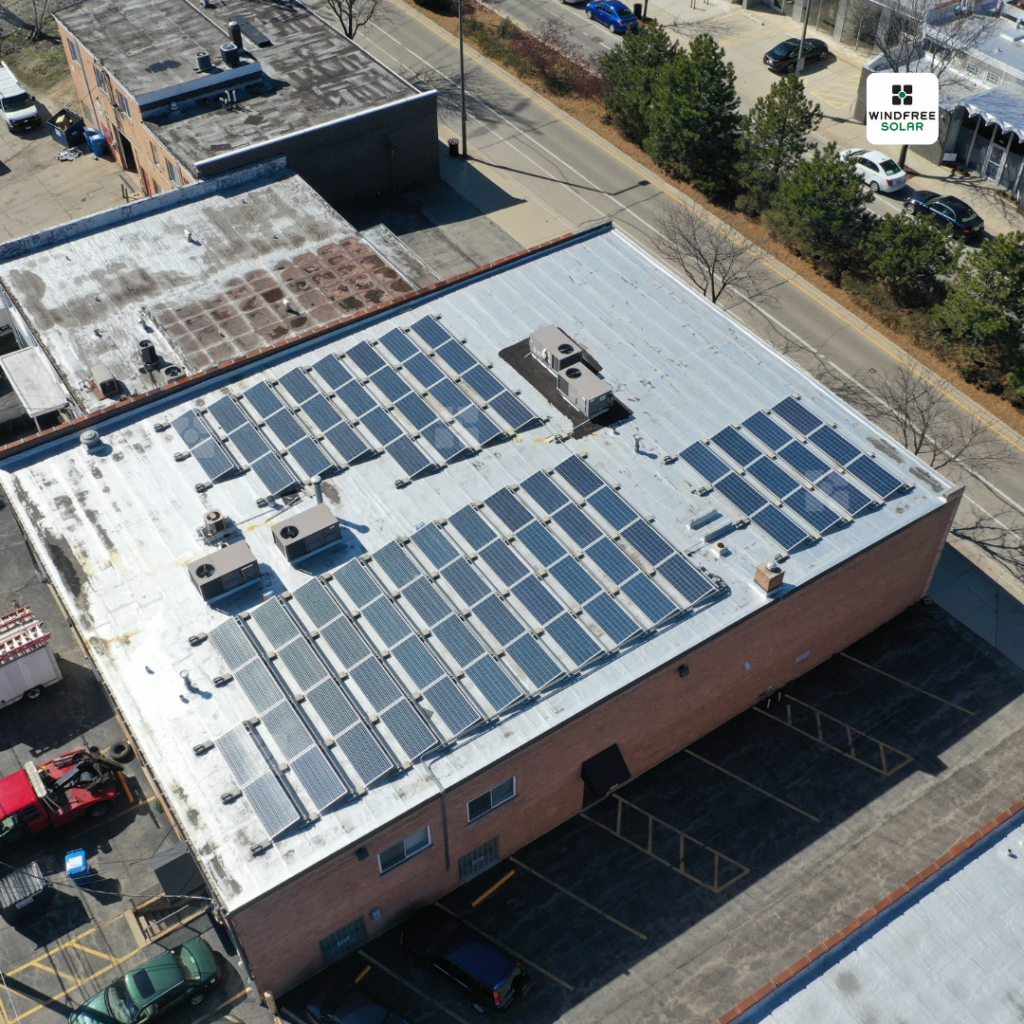
We are working through a situation right now at a commercial property where the building owner hired a solar company from out of state. The crew installed panels on the roof, did not wire them correctly, collected the full payment, and left.
The building owner now has non-functional panels on the roof and a bill from a second installer to diagnose and correct the work. The total cost of this project is now higher than a reputable local company would have charged from the start.
This is not a rare story in 2026. It’s a pattern, and it affects commercial and residential customers alike.
The Counterpoint, Because It’s Fair
Some people have successfully installed DIY solar, and that deserves an honest acknowledgment.
Taylor Ball, who works in solar operations at Windfree, puts it this way, respectfully: the people she knows who successfully completed DIY installs were typically master electricians with existing utility connections and deep code knowledge, and most of those examples came from Wisconsin, where incentives at the time were limited to the federal tax credit and a modest state rebate. Illinois’s SREC program is a different picture, and it requires a licensed approved vendor.
“Most likely, if you’re reading this blog post, you are not that person.”
That’s not a dismissal. DIY solar is technically possible. For the vast majority of homeowners, though, it’s not practical or safe, and the incentive forfeit alone typically makes it more expensive than a professional install.
What a Trusted Local Installer Gives You in 2026
-
Certified, utility-approved panels: not drop-shipped equipment but products that have gone through the full approval process
-
Permit handling, inspection, and ComEd PTO (permission to operate): you don’t navigate that process yourself
-
Warranty-backed work from a company that will still exist in 2036: this is the piece that matters most right now, given the number of companies that didn’t make it
-
Access to Illinois SREC incentives: only available through a licensed approved vendor, and the qualification is handled for you
-
A local service team for maintenance: real people in your area, not a call center or a company that no longer exists
The installer’s fee covers the complete chain: permitting, code compliance, utility coordination, and ongoing accountability after your system is live.
What to Look For in 2026
Before hiring any solar installer this year, ask these questions:
-
How long have you been operating in Illinois?
-
Do you have a local service department, and who handles maintenance calls?
-
Are you licensed and bonded in Illinois, and can I verify that?
-
What happens to my system warranty if your company is acquired or goes under?
These are not aggressive questions. They’re standard due diligence for a $20,000 to $30,000 investment, and a reputable company should answer all of them without hesitation.
The Bottom Line for 2026
More solar companies have failed in the last two years than in any prior period in this industry’s history. The homeowners who are in the best position right now are the ones who hired local, licensed companies with real service infrastructure years before any of those national brands collapsed.
Windfree Solar has been installing in Chicagoland since 2009. We carry all required Illinois licenses, handle permitting and ComEd interconnection, and operate a local service department.
Also see: Solar Panel for House Cost in 2026: What to Expect | Are Solar Panels Expensive in 2026?