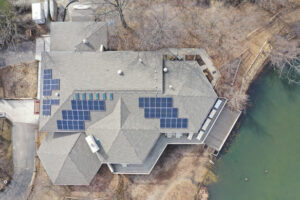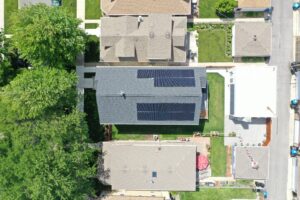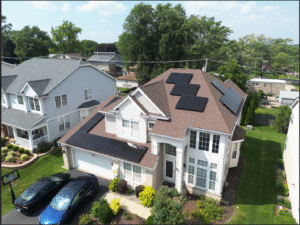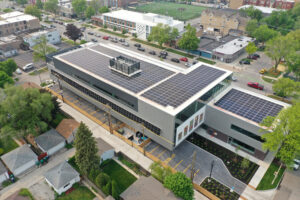
Every day, more Chicago homeowners are looking at their rooftops and wondering: Could solar work for me?
It’s a fair question. Energy costs keep rising. Concerns about the environment grow. And the technology that once seemed futuristic is now commonplace on homes throughout the suburbs and city.
But beyond the headlines and the hype, what does solar actually do for you? Not for the planet in general, not for some abstract future for your home, your budget, your daily life.
Here are the seven key advantages, backed by real data and explained without the sales pitch.
Advantage 1: Slash Your Monthly Electricity Bills
This is the reason most homeowners go solar. And the numbers are compelling.
How Solar Pays You Back Every Day
Every time the sun shines on your roof, your solar panels are generating electricity. That’s electricity you don’t have to buy from ComEd. For a typical Chicago home, a properly sized system can cover 80-100% of annual electricity usage .
Under Illinois’s Smart Solar Billing (for systems installed after January 1, 2025), you receive credits for the excess power you send to the grid. Those credits offset the power you use when your panels aren’t producing—at night, on cloudy days, during winter months .
Real Numbers: What a Typical Chicago Home Can Save
Let’s look at a realistic example. A typical 4-person household in Illinois uses about 10,500 kWh of electricity per year . A 6.6 kW solar system (about 18-20 panels) can produce roughly that amount annually .
At current ComEd rates (around $0.13-0.15 per kWh), that household is paying approximately $1,365-$1,575 per year for electricity.
With solar, those costs drop dramatically. After accounting for the small fixed connection fee (about $20-30/month), annual savings land in the range of $1,000-$1,400 per year .
And here’s the kicker: those savings increase over time. As ComEd rates rise (they’ve increased about 3% annually on average over the past decade), your solar savings rise with them .
Internal Link: Use Windfree’s [solar calculator](Windfree calculator page) to estimate your specific savings.
External Link: The U.S. Energy Information Administration tracks electricity rates by state.
Advantage 2: Increase Your Home’s Resale Value
Solar isn’t just a money-saver while you live in your home. It’s an asset that pays off when you sell.
What Zillow and Industry Data Show
Multiple studies have quantified the value solar adds to homes. Zillow research found that homes with solar panels sell for an average of 4.1% more than comparable homes without solar .
For a median-priced home in the Chicago area (around $350,000), that’s an additional $14,000+ in sale price.
The Lawrence Berkeley National Laboratory has tracked this trend for years and confirms that solar premiums have remained consistent across different markets and housing types .
Why Buyers Pay More for Solar Homes
It’s not just about altruism. Buyers understand that a home with solar comes with built-in savings. They won’t have to pay those monthly electricity bills. They won’t have to deal with the hassle and expense of installing solar themselves.
In competitive real estate markets, solar can also help your home sell faster. A National Renewable Energy Laboratory study found that homes with solar sell 20% faster than those without .
And in Illinois, there’s an additional bonus: solar installations are exempt from property tax assessments. You get the increased home value without the increased tax bill .
Internal Link: Learn more about [solar and home value](Windfree home value page).
External Link: The Lawrence Berkeley National Laboratory publishes ongoing research on solar home premiums.
Advantage 3: Reduce Your Carbon Footprint
For many homeowners, environmental impact matters as much as financial return. Solar delivers on both.
The Environmental Impact in Numbers
A typical 6.6 kW residential solar system in Illinois generates about 8,000-9,000 kWh per year. That electricity replaces power that would otherwise come from the grid—a grid still largely fueled by natural gas, coal, and nuclear .
The environmental savings are substantial:
- 6 tonnes of CO2 avoided annually
- Equivalent to taking 3 passenger vehicles off the road each year
- Equal to planting 150 trees annually
- Over the 25-30 year lifespan of your panels, that’s 150-180 tonnes of CO2 that never enter the atmosphere.
How Solar Fights Climate Change Locally
Chicago has committed to transitioning to 100% clean energy by 2035. Every rooftop solar installation moves the city closer to that goal—not in some abstract way, but by actually generating clean power right where it’s needed .
Solar also reduces strain on the grid during peak demand periods. On hot summer afternoons when air conditioners are running full tilt, solar panels are producing at their maximum. This reduces the need for “peaker plants”—inefficient, polluting facilities that fire up only when demand spikes .
External Link: The Environmental Protection Agency provides greenhouse gas equivalency calculators.
Advantage 4: Gain Energy Independence
There’s something satisfying about generating your own power. But the practical benefits go beyond feeling good.
Locking in Your Rate Against Rising Utility Costs
ComEd rates don’t stand still. Over the past decade, residential electricity rates in Illinois have increased at an average of 3% per year . Some years saw bigger jumps; some smaller. But the trend is consistently upward.
When you install solar, you effectively lock in your electricity rate for the life of the system. You know what your power will cost. You’re not at the mercy of fuel price fluctuations, grid investments, or utility rate cases.
Freedom from Grid Reliance
Without solar, you’re 100% dependent on the grid. If ComEd has issues, you have issues. With solar—especially when paired with battery storage—you gain a measure of control over your own energy.
Even without batteries, you’re drawing less from the grid every sunny day. You’re less affected by rate hikes. You’re participating in your own energy production rather than just being a passive consumer.
Internal Link: Explore [solar + battery options](Windfree battery page) for true energy independence.
Advantage 5: Add Battery Storage for True Resilience
Solar panels alone are great. Solar panels plus batteries are transformative.
Power During Outages
Standard grid-tied solar systems shut down during power outages for safety reasons. But with battery storage, you can keep critical loads running when the grid goes down.
Refrigerator. Lights. Internet. Phone charging. Even medical devices. A properly sized battery system can keep your home powered through extended outages.
Maximizing Savings with Smart Storage
Under Smart Solar Billing (post-2025 installations), you receive credits only for the supply portion of excess power you send to the grid—about half the value you get from using that power yourself .
Batteries let you store your excess solar production and use it during evening hours when your panels aren’t generating. Instead of selling your power to ComEd at wholesale rates, you use it to offset retail-rate electricity .
Illinois offers a $300 per kWh rebate for battery storage installed with solar, making the economics even more attractive .
External Link: The Illinois Commerce Commission provides details on battery storage programs.
Advantage 6: Low Maintenance, Long Lifespan
Solar panels are remarkably reliable. Once they’re installed, they mostly just sit there and work.
What 25+ Years of Reliable Power Looks Like
Quality solar panels come with 25-year performance warranties because manufacturers have decades of data showing they’ll still be producing at 85-90% of original capacity after that time .
Inverters typically last 10-15 years and may need replacement once during your system’s life. Other than that, maintenance is minimal. Panels have no moving parts. They don’t wear out.
Warranties and Degradation Explained
Panels degrade slowly over time—about 0.5% per year on average . That means after 25 years, your system will still be producing about 87-88% of its original output.
Most manufacturers warranty that your panels won’t degrade faster than a specified rate. If they do, you’re covered.
Rain naturally cleans panels in most climates. In dry spells, an occasional hose-down helps, but it’s rarely necessary. There are no oil changes, no filters to replace, no ongoing costs.
Internal Link: Read about Windfree’s [installation warranties](Windfree warranties page).
Advantage 7: Smart Home Integration
Solar pairs beautifully with other home technologies, creating a cohesive energy ecosystem.
Pairing Solar with EVs, Heat Pumps, and Smart Appliances
If you drive an electric vehicle, solar can fuel your car from your roof. The average EV uses about 4,000 kWh per year—easily covered by a typical home solar system .
Heat pumps for heating and cooling are far more efficient than traditional HVAC. When powered by solar, they can operate with near-zero carbon emissions .
Running Your Home on Sunshine
Smart home systems can automatically shift energy-intensive tasks to daylight hours when your solar is producing. Run the dishwasher mid-day. Charge the EV while the sun shines. Pre-cool the house before evening rates kick in.
These strategies, sometimes called “load shifting,” maximize the value of every kilowatt-hour your panels generate.
External Link: The Department of Energy offers resources on home energy integration.
Important 2026 Update: What Changed with Federal Incentives
Solar incentives change over time. It’s important to work with current information.
The 30% Tax Credit Is No Longer Available
The federal Investment Tax Credit (ITC) that offered 30% off solar system costs expired for residential owned systems on December 31, 2025 . It is not available for homeowners who install solar in 2026.
You may still see old articles or outdated websites mentioning this credit. They are incorrect. That credit is gone.
Commercial installations and third-party ownership models (leases/PPAs) may still qualify under different rules, but homeowners who purchase systems outright do not receive a federal tax credit .
What IS Still Available for Illinois Homeowners
While the federal credit has expired, Illinois offers strong state-level incentives:
- Illinois Shines (SRECs): Provides upfront payments for the renewable energy credits your system generates. For a typical 8kW system, this is worth approximately $7,000-$9,000 .
- ComEd Distributed Generation Rebate: A one-time payment of $300 per kW of solar capacity (about $2,400 for an 8kW system) .
- Battery Storage Rebate: An additional $300 per kWh for battery storage installed with solar .
- Property Tax Exemption: Solar increases your home’s value without increasing your property tax bill .
- These programs make solar affordable even without the expired federal credit.
Internal Link: Contact Windfree for a [current incentive estimate](Windfree contact page).
External Link: The DSIRE database tracks all active solar incentives by state.
Is Solar Right for Your Home?
Solar isn’t for everyone. Here’s how to know if it makes sense for you.
Good Candidates for Solar
Solar works best when:
- Your roof gets good sun exposure (south-facing is ideal, east/west can work)
- You have little to no shading from trees or buildings
- Your roof is in good condition (10-15+ years of life remaining)
- You plan to stay in your home for 5+ years
- You have high electricity bills or expect them to rise
When to Be Cautious
Solar may not be right if:
- Your roof needs replacement soon (do that first)
- Your home is heavily shaded
- You’re planning to move within 2-3 years
- You’re not comfortable with a long-term investment
How to Find Out
The only way to know for sure is to have a professional assessment. A site visit can determine your roof’s suitability, expected production, and financial payback.
Frequently Asked Questions
Q: Is the 30% federal tax credit still available?
A: No. It expired for residential owned systems on December 31, 2025. It is not available for 2026 installations .
Q: What incentives are still available in Illinois?
A: Illinois Shines (SREC payments), ComEd’s DG rebate ($300/kW), battery storage rebate ($300/kWh), and property tax exemption are all active .
Q: How much will solar save me each month?
A: A typical Chicago home saves $1,000-$1,400 annually after solar, depending on system size and energy usage .
Q: How long do solar panels last?
A: Panels are warrantied for 25 years but often produce well beyond that, gradually degrading about 0.5% per year .
Q: Do I need battery storage?
A: Not required, but batteries provide backup power during outages and help maximize savings under Smart Solar Billing .
Q: Will solar work on my Chicago home with its old roof?
A: If your roof needs replacement, do that first. Solar panels last 25+ years, so they should be installed on a roof with similar remaining life.
Q: Can I get solar with no money down?
A: Yes, through solar loans, leases, or Power Purchase Agreements. Windfree can explain your options.
Q: How do I get started?
A: Contact Windfree Solar for a consultation. They’ll assess your home and provide a custom proposal.
Your Next Step
Solar isn’t just about panels on a roof. It’s about lower bills, energy independence, environmental impact, and a smarter home.
The 30% federal tax credit is gone that chapter is closed. But Illinois state incentives remain strong, and the technology has never been more reliable or more affordable.
At Windfree Solar, we’ve been helping Chicago homeowners navigate solar for over 15 years. We know the programs, the technology, and the local conditions.
👉 Contact Windfree Solar today for a free consultation.
👉 Use our solar calculator to estimate your savings.
*Serving homeowners throughout Chicago, Naperville, Evanston, Oak Park, and all surrounding suburbs with professional solar installation backed by 15+ years of local experience.*